
Armenians that were branded ‘enemies of the state’ after speaking up for Eurovision winner Conchita Wurst win positive judgment
On Tuesday 7 January 2025, the European Court of Human Rights (ECtHR) published its judgment in Minasyan v Armenia, a case brought to the ECtHR by fourteen Armenian nationals – LGBT and women’s rights activists, journalists and researchers. The ECtHR found violations of Articles 8 and 14 of the European Convention on Human Rights after Armenia failed to protect the applicants from anti-LGBTQI+ hate speech when a news website labelled them ‘enemies of the state’ and shared their Facebook profiles.
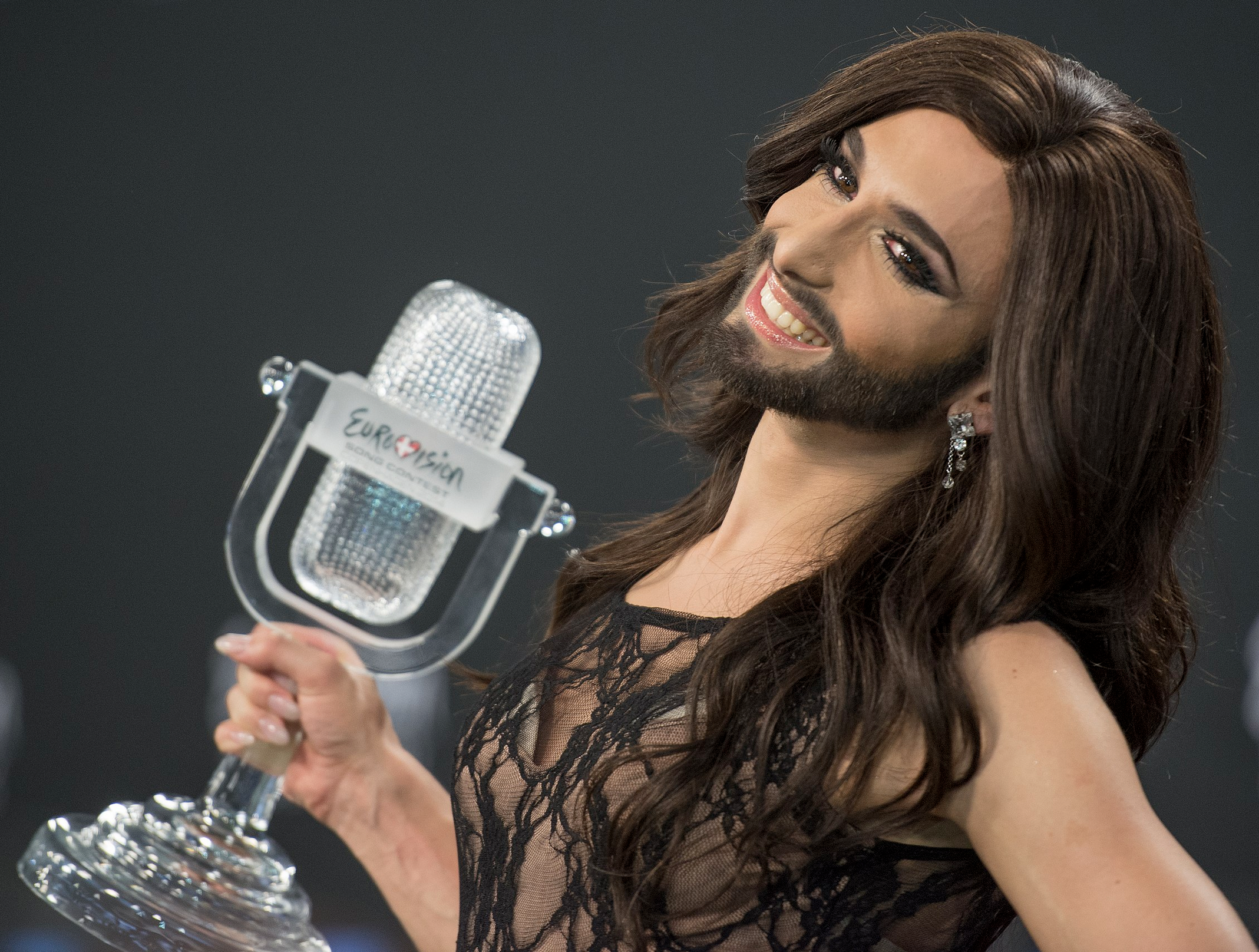
The case, which was litigated by EHRAC and our partner Pink Armenia, related to a series of articles published by the Iravunk newspaper. The first article, written by Iravunk’s Editor-in-Chief, was published in May 2014. The day before the article was published, the applicants had responded on social media to homophobic comments made by members of Armenia’s 2014 Eurovision Song Contest regarding the Austrian winner, Conchita Wurst. The jury members had said their decision to award the lowest points possible to Wurst, a cross-dressing queer man, was due to their ‘revulsion’ at him, a feeling that they compared to how they felt about ‘mentally ill’ people.
The author of the Iravunk article described the applicants as members of an ‘International Homosexual Lobby’ focused on reducing the birth rate and weakening the military. He accused the members of this ‘Lobby’ of seeking to intimidate those who ’oppose their efforts to make perversion the norm in Armenia’.
The article provided links to the applicants’ Facebook profiles, described them as ‘Enemies of the Nation and the State’, and called on the government, media companies and those working the education system to deny them work, press coverage and ‘the opportunity to educate the younger generations.’
Two weeks after publication of the article, a number of those who it named asked Iravunk to retract it, but the website decided to instead publish a further article by the same author containing insults directed at those who had signed the request. Two weeks later, the applicants launched civil proceedings against the newspaper and its Editor-in-Chief, seeking damages and a public apology. Over the next six weeks, Iravunk published further articles insulting the applicants.
Six months after the publication of the original article, the Editor-in-Chief and the Chair of Iravunk’s editorial board were honoured by the President of Armenia and the President of the National Assembly. Five days later, the District Court found against the applicants saying that the article was simply the author exercising his freedom of expression.
Over the next few months, Iravunk continued to target the applicants with further articles containing insults and false accusations. The following March, the Supreme Court rejected the applicants’ appeal.
Judgment
The applicants complained that the newspaper articles amounted to harassment and hate speech and had interfered with their private life, and that the Armenian State had failed to provide protection against such harassment and hate speech in breach of Articles 3 (Prohibition of torture and ill-treatment) and 8 (the Right to respect for private and family life) of the Convention. They also argued that the State had failed to acknowledge and provide protection from the discriminatory motives of the author, including the incitement to discrimination on the grounds of the applicants’ LGBTI-related activism and their perceived sexual orientation, in breach of Article 14 (the Prohibition of discrimination).
The ECtHR found Armenia had violated Article 8 (the Right to respect for private and family life) in conjunction with Article 14 (the Prohibition of discrimination). The ECtHR found that the author of the article had attacked the applicants because of their support for the LGBTI community and had expressly incited the public to commit discriminatory acts against the applicants, and that the domestic courts had failed to protect the applicants from speech advocating intolerance and harmful acts. The ECtHR further expressed concern about the ineffectiveness of the legal framework in protecting the applicants from homophobic hate speech.
“This is the second judgment by the ECtHR which states that Armenia has failed to provide effective protection for LGBTI people against hate speech. In the two and half years since the first such judgment (in Oganezova v. Armenia), the State has failed to provide any evidence that the Criminal Code article on liability for public calls to violence is being effectively applied in practice.
‘We also note that ten years’ after work began on the anti-discrimination law, the current draft still lacks effective mechanisms to protect LGBTI people.
‘Pink Armenia and EHRAC will monitor the implementation of this judgment.’
Hasmik Petrosyan, lawyer, Pink Armenia
The ECtHR awarded the applicants 2,000 euros each in non-pecuniary damages.
Photo: Conchita Wurst, after winning the Eurovision Song Contest 2014.
Photo credit: Albin Olsson, used under CC-by-3.0-license. (Creative Commons).

